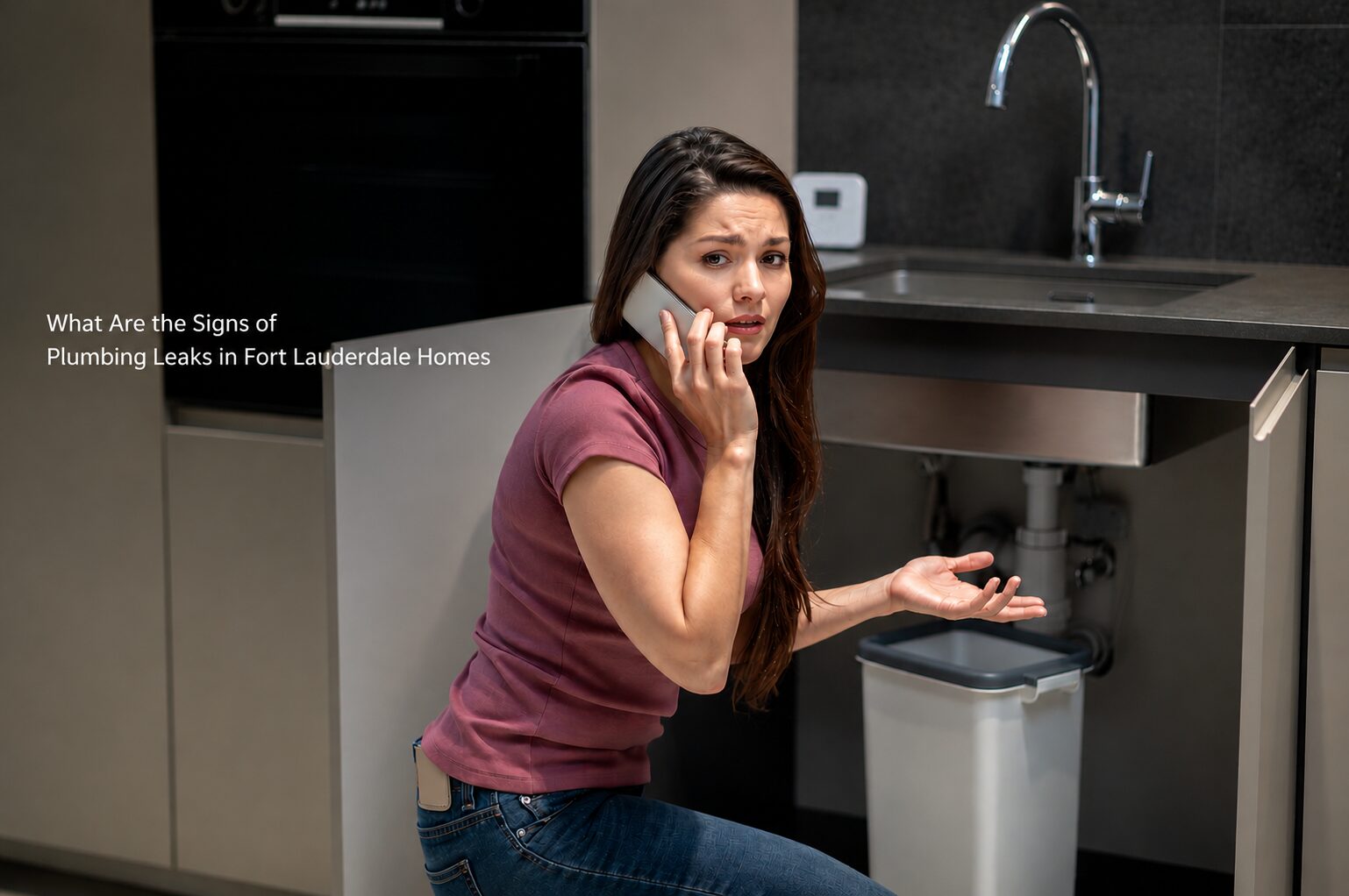

Plumbing leaks in Fort Lauderdale homes don’t always announce themselves with a burst pipe or a puddle on the floor. Many leaks develop slowly, behind walls, under slabs, and inside ceilings, causing significant damage long before a homeowner notices anything wrong. It’s why working with a trusted plumbing company in Fort Lauderdale, FL can save you a lot of hassle and expense.
If you suspect a leak or just want to know what to look for, Plumbing Around the Clock is available 24 hours a day to inspect, locate, and fix leaks anywhere in your home. Call (954) 874-5152 and a real person answers every time.
What causes plumbing leaks in Fort Lauderdale homes?
Fort Lauderdale homes face specific conditions that make leaks more likely than in other parts of the country.
Many homes built before the 1990s still have galvanized steel or polybutylene pipes. Both materials corrode and fail over time. South Florida’s hard water accelerates that process by depositing minerals inside pipes, which narrows the flow and increases pressure on weakened sections.
The climate adds another layer. Humidity and heat cause pipes, fittings, and joints to expand and contract repeatedly. Over the years, that movement works connections loose. Outdoor plumbing and pipes running through unconditioned spaces are especially vulnerable.
Slab construction creates a separate problem. Most Fort Lauderdale homes are built on concrete slabs, and supply lines often run beneath that slab. When those pipes fail, the leak is invisible from above, but the damage accumulates underneath your home.
Does a higher water bill mean I have a leak?
A water bill that jumps without any change in household usage is one of the clearest signs of a hidden leak.
To check, turn off every fixture and appliance that uses water in your home. Then watch your water meter for 15 minutes. If the dial moves, water is flowing somewhere it should not be.
A steady, unexplained increase over two or three billing cycles is worth taking seriously. It points to a slow leak that has been running long enough to register on your usage, often a supply line, a joint behind a wall, or a pipe beneath the slab.
What does a slab leak feel like from inside the house?
Slab leaks are common in South Florida and have a specific set of signs.
Warm spots on the floor, often noticed in bare feet on tile, indicate hot water escaping from a pipe beneath the slab. You may also hear the faint sound of running water in a room where no fixtures are in use. Some homeowners notice the floor feels damp or soft in a specific area.
Water bills rise steadily with slab leaks because the pipe runs continuously. Mold and mildew smells at floor level are another indicator, particularly in rooms with tile or concrete flooring.
Leak detection using non-invasive moisture testing equipment can locate the source without cutting into your slab unnecessarily.
Can I have a leak if I don’t see any water?
Yes. Most hidden leaks produce no visible water for months.
What you may notice instead: a mold or mildew smell in a room that stays dry, paint or drywall that bubbles or warps without explanation, or discoloration on a ceiling below a bathroom. Soft spots in flooring, especially wood or laminate, can indicate water has been pooling beneath the surface for some time.
Low water pressure at fixtures throughout the house, when it develops gradually, can also point to a leak in the supply line rather than a blockage.
How do plumbers find leaks behind walls and under slabs?
Professional leak detection uses moisture testing equipment and thermal or acoustic tools to locate leaks without opening walls or cutting slabs as the first step.
A plumber identifies the area of concern, tests for moisture levels in the surrounding material, and pinpoints the source before recommending any repair. This approach avoids unnecessary damage to your home and gives you a clear picture of what needs to be fixed before any work begins.
For leaks behind walls, pipe repair often resolves the issue in a single visit. For homes with widespread pipe deterioration, repiping may be the more practical long-term fix.
What should I do if I think I have a leak right now?
If water is actively flowing somewhere it should not be, shut off the main water supply to your home immediately. The shut-off valve is typically near the water meter or where the main line enters the building.
Then call for emergency plumbing service. Do not attempt to open walls or dig around the foundation before a plumber arrives. You risk additional damage and will complicate the diagnosis.
For suspected hidden leaks with no active flooding, same-day service is appropriate. The longer a hidden leak runs, the more it costs to repair the source and the surrounding damage.
“I had an emergency plumbing situation, and Pedro from Plumbing Around the Clock came through for me in the best way possible. He showed up quickly, solved the issue fast, and was extremely nice and helpful throughout the whole process.” — Daniel L., Google
Are older Fort Lauderdale homes more at risk for leaks?
Homes built before the 1990s carry a higher risk, specifically because of the pipe materials common in that era.
Galvanized steel pipes corrode from the inside out. The corrosion narrows the pipe, increases pressure, and eventually causes the wall of the pipe to fail. Polybutylene, a gray plastic pipe widely used through the 1980s, becomes brittle over time and cracks without warning.
If your home has either material and you are experiencing recurring leaks, low pressure, or discolored water, a sewer inspection and a pipe assessment are worth scheduling before the next failure.
Frequently Asked Questions
How do you find leaks without tearing up walls? Moisture testing and precision detection equipment locate leaks behind walls, under slabs, and in ceilings without needing to demolish anything first. The source is confirmed before any repair work is recommended.
What is a slab leak? A slab leak is a pipe leak that occurs underneath the concrete foundation of a home. Signs include warm spots on the floor, sudden spikes in water bills, and the sound of running water when no fixtures are in use. Plumbing Around the Clock locates and repairs slab leaks without unnecessary excavation.
How do I know if I have a hidden water leak? Common signs include unexplained increases in your water bill, warm or damp spots on floors, the sound of running water when no fixtures are in use, mold or mildew smells, and low water pressure. If you notice any of these, call for a leak detection inspection before the damage gets worse.
What should I do while waiting for a plumber to arrive? For active leaks, locate your main water shut-off valve and turn it off. Do not attempt to open walls or cut pipes before the plumber arrives.
Ready to Fix Your Plumbing Problem?
Whether you’re dealing with a sudden leak, a backed‑up drain, or needing reliable maintenance, Plumbing Around The Clock is here to help 24 hours a day, 7 days a week. With licensed technicians, upfront pricing, and fast response times, you’ll get honest, professional service that helps you get back to your day with confidence.
Call now: (954) 874‑5152
Service area: Fort Lauderdale & surrounding South Florida neighborhoods
Don’t wait for the problem to get worse; contact us now and experience plumbing support you can trust anytime, day or night.
Related Topics: