- 3434 SW 53rd Ct, Fort Lauderdale, FL 33312, United States
- [email protected]
- 3434 SW 53rd Ct, Fort Lauderdale, FL 33312, United States
- [email protected]

- About
- Services
- Emergency Plumbing in Fort Lauderdale, FL
- Residential Plumbing in Fort Lauderdale, FL
- Commercial Plumbing Services in Fort Lauderdale, FL
- Top-Rated Drain Cleaning Services in Fort Lauderdale, FL
- Leak Detection in Fort Lauderdale, FL
- Pipe Repair in Fort Lauderdale, FL
- Water Filtration in Fort Lauderdale, FL
- Hydro Jetting
- Tub and Shower Fixtures Fort Lauderdale, FL
- Sewer Line Repair Fort Lauderdale, FL
- Sewer Inspection Fort Lauderdale, FL
- Repiping
- Backflow Prevention in Fort Lauderdale, FL
- Top-Rated Water Heater Repair Services in Fort Lauderdale, FL
- Faucet Repair in Fort Lauderdale, FL
- Toilet Repair in Fort Lauderdale, FL
- Plumber in Boca Raton
- Plumber Miramar FL
- Backflow Prevention in Miramar, FL
- Commercial Plumbing
- Residential Plumber Miramar FL
- Drain Cleaning
- Emergency Plumber
- Faucet Repair
- Garbage Disposal Repair
- Hydro Jetting in Miramar, FL
- Leak Detection
- Repiping Miramar FL
- Sewer Line Repair in Miramar, FL
- Sewer Inspection Miramar FL
- Toilet Repair Miramar FL
- Tub and Shower Fixtures Miramar FL
- Water Filtration in Miramar, FL
- Pipe Repair Miramar FL
- Service Areas
- Fort Lauderdale Neighborhood
- Serving All of Fort Lauderdale, FL
- Plumber Alandco FL
- Plumber Broadview Park FL
- Plumber Flagler Village FL
- Plumber Hacienda Village FL
- Plumber Harbor Beach FL
- Plumber Las Olas Isles FL
- Plumber Melrose Manors FL
- Plumber Progresso Village FL
- Plumber Rio Vista FL
- Plumber Royal Poinciana FL
- Plumber Tarpon River FL
- Plumber Victoria Park FL
- Plumber Melrose Manors FL
- Miramar Neighborhoods
- Our Locations
- Plumber Oakland Park FL
- Plumber Plantation FL
- Plumber Pompano Beach
- Plumber Sunrise FL
- Plumber Tamarac FL
- Plumber Weston FL
- Hollywood FL Plumber
- Plumber Coconut Creek FL
- Plumber Cooper City FL
- Plumber Coral Springs FL
- Plumber Davie FL
- Plumber Deerfield Beach
- Plumber Lauderhill FL
- Plumber Dania Beach FL
- Plumber Hallandale Beach
- Plumber Margate FL
- Plumber Pembroke Pines FL
- Plumber Parkland FL
- Contact
2026 FLORIDA PRICING GUIDE
How Much Does a Plumber Cost in Florida?
A Complete 2026 Pricing Guide
Wondering what a plumber costs in Florida? See real 2026 price ranges for repairs, drain cleaning, water heaters, and emergency calls, plus tips to avoid overpaying.
If you’ve ever stood over a dripping pipe wondering whether to call a plumber from a plumbing service for master plumbers or just Google “how to fix it yourself,” you already know the real question isn’t whether you need help. It’s what the plumbing repair cost for emergency services will be. Florida homeowners deal with a specific mix of pressures that other states don’t: hard water, sandy or shifting soil, slab foundations, and a hurricane season that keeps plumbing systems working overtime. All of that shapes pricing in ways a national average never quite captures.
What Florida Plumbers Charge Per Hour
Hourly labor rates for a professional plumber in Florida generally run between $50 and $150, with $75 an hour being a reasonable statewide average cost based on typical plumber rates and local hourly wages. Master plumber rates in Florida commonly run about $100 to $200 per hour, and those higher plumbing rates usually reflect added expertise and insurance overhead. Rates climb in denser metro markets. Miami-Dade County plumbers tend to land between $85 and $120 an hour, while Central Florida markets like Orlando and Tampa homeowners typically see $65 to $125. Rural and inland areas in North Florida often sit at the lower end of that range, or if one hires journeyman plumbers. Florida plumber rates can jump much higher for emergency or specialty work, with Tampa Bay pricing sometimes reaching $200 to $400 per hour.
Most companies also charge a trip or service call fee, usually somewhere between $50 and $200 for plumbing work, which covers the plumber showing up and diagnosing the issue. Some businesses roll this into the first hour of labor; others charge it separately even if you decline the recommended repair. It’s worth asking upfront so there are no surprises on the invoice.
Typical Costs by Job Type
Hourly rates only tell part of the story, since a typical plumbing job in Florida is often billed at a flat rate, and the typical price ranges below give a better sense of what homeowners may pay for common services, from routine drain cleaning to full repiping:
| Service | Typical Florida Cost Range |
|---|---|
| Standard drain clearing (sink, tub, toilet) | $110 – $350 |
| Main sewer line clog (snaking) | $200 – $600 |
| Hydro jetting (severe clogs, tree roots) | $350 – $1,600 |
| Leak detection (non-invasive) | $150 – $600 |
| Slab leak repair | $500 – $4,000+ |
| Sewer line repair or replacement | $1,500 – $8,000+ |
| Standard electric water heater install | $1,200 – $2,000 |
| Tankless water heater install | $2,500 – $4,500 |
| Whole-home repiping | $4,500 – $15,000 |
Common services such as a leaky faucet fix and toilet installation usually land near the lower end of plumbing prices, while bigger installs, remodel-related work, and other major projects cost more. These figures assume a straightforward job with normal access, so simple repairs and minor repairs stay cheaper than a clogged drain that turns complicated or major sewer line issues that require more labor and materials. Costs move up when a plumber has to cut through drywall, dig up landscaping, pull a permit, or work around a slab foundation, which is the default in most Florida homes built after the 1950s.
Why Florida Pricing Looks Different Than the National Average
A few Florida factors push plumbing costs in directions homeowners in other states don’t usually deal with:
01
Slab foundations
Most Florida homes are built on concrete slabs rather than basements, so pipe access for repairs often means locating a leak precisely before any work begins, which adds a diagnostic step many other markets skip. In sewer-related jobs, Florida’s sandy soil can infiltrate lines and lead to sand and sludge buildup, which is one reason cleaning and hydro jetting can cost more in sandy soil conditions.
02
Hard water and corrosion
Florida’s water chemistry accelerates wear on older copper and galvanized pipe, which is part of why repiping projects and pinhole pipe repair calls show up so often on invoices here.
03
Storm season demand
Emergency plumbing calls spike during and after hurricane season, and rates for after-hours or storm-related emergency work run higher than routine daytime service.
04
Permitting
Many counties require permits for water heater replacements and repiping work, and that fee, typically $50 to $350, gets passed through to the homeowner.
Emergency and After-Hours Pricing
Emergency plumbing, meaning nights, weekends, and holidays, generally carries a premium of 1.5 to 2 times the standard hourly rate because emergency calls require urgent response timing and after-hours staffing. In some South Florida markets, emergency rates have been reported as high as $170 an hour. That premium exists because true plumbing emergencies, a burst pipe, a failed water heater flooding a garage, a sewer backup, can’t wait for business hours, and the company is compensating a technician for being on call outside normal shifts.
If a situation is genuinely urgent, the after-hours fee is almost always worth it compared to the cost of water damage from a delay. If it can reasonably wait until morning, scheduling non-urgent work during normal hours is one of the easiest ways to save money.
Factors That Push Your Final Bill Higher
Beyond the base cost of the service itself, several things affect plumbing rates in Florida, including access, parts, permits, and the job’s complexity, and together these factors shape both plumbing budgets and the final bill:
01
Age and material of existing pipes, since older galvanized or polybutylene lines often need more careful, time-consuming pipe repair work than modern PEX
02
Accessibility, particularly for slab leaks or lines that run under tile, pavers, or landscaping, which is where precise leak detection pays for itself
03
Parts and equipment, especially for tankless water heaters or specialty fixtures, where material costs and labor costs can both raise the price, and higher-quality replacement parts may cost more upfront but last longer
04
Permit and inspection requirements, which vary by county
05
Distance from the plumber’s service area, which some companies factor into trip fees
How to Get a Fair Price
A few habits go a long way toward avoiding overpaying:
01
Get a written estimate before work begins, not just a verbal quote over the phone
02
Ask whether the estimate uses flat rate pricing or hourly billing, and whether any flat fees or additional fees could appear later
03
Confirm whether the service call fee is credited toward the repair if you move forward
04
Verify the company holds either a state-certified or locally registered contractor license in Florida, and check that status through the Department of Business and Professional Regulation
05
Licensed plumbers typically provide insurance-backed work and warranties that unlicensed operators cannot
06
Compare at least two quotes for anything beyond a basic repair, especially repiping or water heater replacement
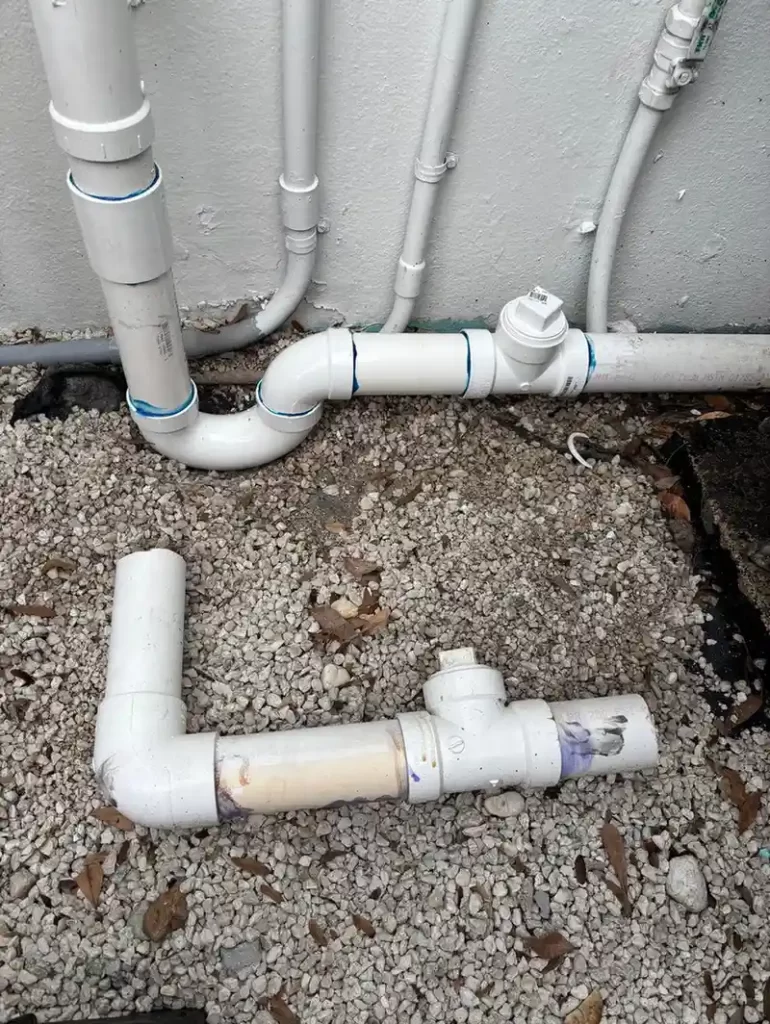
A licensed, established company will walk you through pricing without pressure. If a quote seems unusually low, it’s worth asking what isn’t included, since permit fees, disposal of an old unit, or code-required upgrades sometimes show up later as add-ons. Before approving the job, confirm the company carries the right liability coverage and workers’ comp.
Financing and Warranty Considerations
Larger jobs like water heater replacement or repiping often come with financing options through the plumbing company, which can turn a $4,000 project into manageable monthly payments. It’s worth asking about this upfront rather than assuming it’s not available, since many Florida plumbing companies partner with third-party lenders specifically for this purpose. Rates can also vary because commercial plumbers may price work differently than residential repairs, as commercial projects often require specialized licenses, more equipment, and compliance with strict building codes.
Warranty terms are just as important as the price tag. A lower quote that comes with a 90-day labor warranty isn’t necessarily a better deal than a slightly higher quote backed by a two-year warranty on both parts and labor. Ask specifically what’s covered, for how long, and whether the warranty transfers if you sell the home, since that can matter for resale on major systems like water heaters and repiping work, especially for higher-cost jobs involving gas lines or large equipment installations.
A Realistic Way to Budget
Rather than trying to predict an exact number before a plumber sees the problem, the exact average cost depends on the plumbing issue, but it helps to budget in ranges tied to the type of work. Simple repairs or other residential repairs, like a drain clog or running toilet, are often same-day, under-$400 fixes. A leak that requires cutting into drywall or a slab climbs into four figures. A full system replacement, whether that’s a water heater or a residential plumbing repiping project, is worth getting at least two written quotes for, since larger jobs with more specialized scopes are less predictable than a basic repair. Sump pump installation and water treatment systems may also require advance planning because they add equipment and installation costs while helping protect plumbing fixtures.
Setting aside a modest plumbing maintenance fund each year, even $200 to $300, can also soften the impact of the inevitable repair. Florida’s combination of hard water, humidity, and aging housing stock in many neighborhoods means most homeowners will need a plumber more often than they’d like, so budgeting for it ahead of time beats scrambling for it after a pipe bursts.
Frequently Asked Questions
Is it cheaper to call a plumber during the day than at night?
Yes. Standard daytime service is billed at the regular hourly rate, while nights, weekends, and holidays typically carry a premium of 50 to 100 percent above that rate. Even on flat-rate work, after-hours scheduling can still raise the total.
Do Florida plumbers charge for estimates?
Many companies charge a standard service or trip fee that covers the visit and diagnosis, which is often credited toward the repair cost if you proceed. Ask before scheduling, and confirm whether the quote includes toilet repair or other small fixture work in full or if parts are billed separately.
Why do slab leak repairs cost so much more than other leaks?
Because the pipe is under a concrete foundation, a plumber first needs precise leak detection equipment to locate the exact failure point before any repair work, which adds both time and specialized equipment to the job. In many cases, slab leak detection is billed as a separate diagnostic service before the repair itself.
Does homeowners insurance cover plumbing repairs in Florida?
It depends on the cause. Sudden, accidental damage like a burst pipe is often covered, while gradual leaks, wear and tear, or lack of maintenance typically are not. Check your specific policy language, and if you call Anchor Plumbing or any other local provider, verify licensing and insurance before hiring.
How often should Florida homeowners have their plumbing inspected?
An annual inspection is a reasonable baseline, especially for homes over 15 years old or in areas with known hard water or shifting soil conditions.